Soft and Soothing: Your Guide to Pastel Color Palette with Hex Codes
There is a certain quiet power in pastel colors. They don’t shout for attention; instead, they invite you in with a whisper. A pastel color palette, defined by its high lightness and low saturation, evokes feelings of calm, creativity, and modern elegance. For designers, entrepreneurs, and creators, having a go-to set of these soft hues isn’t just a nicety—it’s a strategic asset. A well-curated Pastel Color Palette with Hex Codes provides the exact tools needed to build a brand identity that feels approachable, stylish, and memorable without overwhelming your audience.
Think of pastels as the sophisticated cousins of primary colors. A pastel pink isn’t just a light red; it’s a blush with a hint of grey, making it versatile and gentle. A pastel blue carries the serenity of a clear sky but with a muted, chalky quality. This inherent softness makes pastel palettes incredibly adaptable. They work beautifully as primary brand colors for businesses that want to project warmth and trust, or as accent colors to add a touch of whimsy and freshness to a more neutral scheme. The personality of a pastel palette is one of quiet confidence—it suggests creativity, attention to detail, and a modern aesthetic that resonates across industries from beauty and wellness to tech and boutique retail.
Where Pastel Palettes Truly Shine
The applications for a thoughtful pastel color scheme are vast, touching nearly every corner of creative and commercial work. In brand identity, pastels are a powerhouse. They are perfect for crafting logos and visual systems for small businesses, solopreneurs, and startups that need to appear friendly and professional from day one. Think of a skincare brand using soft lavenders and creams, or a wedding planner’s portfolio bathed in blush and sage. These colors communicate a specific mood and set client expectations before a word is read.
In web design and digital marketing, pastels offer a solution to a common problem: how to create a visually engaging site that doesn’t cause eye strain. They provide excellent backgrounds for content, make text blocks more readable when used as subtle tints, and create a cohesive, calming user experience. For social media graphics, a pastel palette is invaluable. It ensures your Instagram grid, Pinterest pins, and Facebook ads look intentionally curated and harmonious, which is key for building recognition in a crowded feed. They also excel in packaging design, especially for products targeting a design-conscious audience. A pastel-colored box or label feels premium and thoughtful.
Beyond commercial use, pastels are a favorite in editorial design for magazines, lookbooks, and digital publications. They create elegant layouts that allow photography and typography to take center stage. For print materials like business cards, flyers, and stationery, pastels translate beautifully, offering a tactile quality that feels both modern and personal. Even for personal projects—like crafting digital invitations, designing a blog, or creating art prints—a reliable pastel palette with exact hex codes is an essential part of your design assets toolkit.
Choosing and Using Your Pastel Palette Strategically
Simply liking the look of a pastel color isn’t enough. Effective use requires strategic thinking. When evaluating a pastel palette, consider its overall temperature. Does it lean warm (peachy pinks, soft yellows) or cool (icy blues, mint greens)? The temperature should align with your brand’s personality. A warm palette feels more energetic and inviting, while a cool palette feels more serene and professional.
Testing is non-negotiable. How do the colors work in context? View them on a screen next to your intended typography. A pastel background might require a darker, high-contrast font for readability. In logo design, ensure the pastel color has enough presence to be recognizable, even when scaled down. It’s often wise to pair a pastel with a deeper neutral—like charcoal, navy, or rich brown—to create visual hierarchy and ensure important elements stand out.
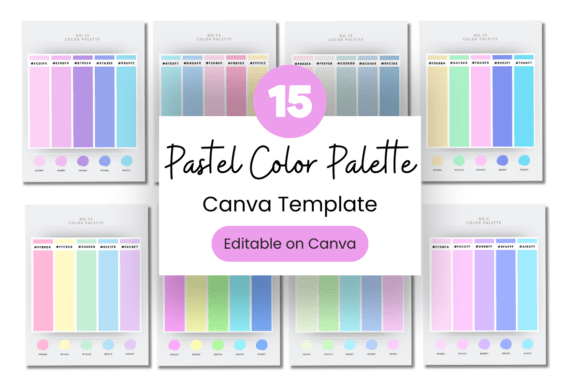
This is where a resource like a pre-made Canva template becomes a practical starting point. A template featuring 15 Pastel Color Palette with Hex Codes does the heavy lifting of curation. It offers variety and cohesion, allowing you to experiment with different pastel combinations without starting from scratch. The hex codes are critical—they ensure perfect color consistency across all your design assets, from your website CSS to your printed brochures. This consistency is the bedrock of professional brand perception. When your social media post matches your invoice which matches your packaging, it builds subconscious trust and recognition with your audience.
Remember, pastels are versatile but not always dominant. They often work best as part of a larger system. Use them to create a mood, highlight special sections, or soften a layout. Pair them with a strong, clean sans serif font for a modern look, or with a delicate script font for a more elegant feel. The key is to let the pastel palette serve your overall message, enhancing it rather than overpowering it. By starting with a solid, editable foundation, you give yourself the creative freedom to build a brand that is both beautiful and strategically sound.