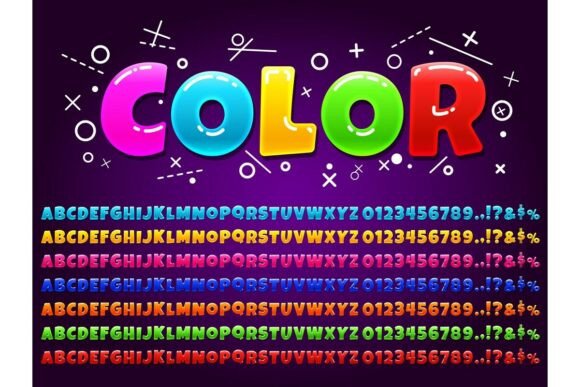
Vivid Color Alphabet for Cartoon Game: A Design Toolkit
When you think about the visual language of childhood, what comes to mind? It’s rarely muted tones or rigid structures. It’s the explosive joy of a primary color palette, the tactile feel of building blocks, and the boundless energy of play. Capturing that essence in a design project is a powerful way to connect with audiences on an emotional level. The Color Alphabet for Cartoon Game. Vivid typeface is a specialized tool built for exactly that purpose. It’s not just a font; it’s a complete visual system designed to inject immediate personality, warmth, and a sense of fun into any project targeting families, children, or the young at heart.
Anatomy of Joy: What Makes This Typeface Tick?
At its core, Color Alphabet for Cartoon Game. Vivid is a display font that prioritizes character and impact over quiet elegance. Its visual characteristics are unmistakable. Each letterform is crafted with a soft, rounded geometry, eliminating sharp corners in favor of shapes that feel approachable and safe. The lettering for kids is inherently friendly, but the "vivid" descriptor is key. The font is designed to be used in multiple, vibrant colors, mimicking the look of toy blocks, sprinkles, or confetti. Imagine a single word where the 'A' is a bold red, the 'B' is a sunny yellow, and the 'C' is a sky blue—this multi-color application is where the typeface truly shines.
The personality of this creative font is unapologetically playful, energetic, and optimistic. It avoids the sometimes-chaotic look of purely handwritten fonts by maintaining consistent proportions and weights across its alphabet symbols, numbers, and punctuation. This gives it a polished, professional quality suitable for commercial use, while retaining the spontaneous charm of hand-painted lettering. The overall appeal is nostalgic yet modern, reminiscent of classic children’s television branding or the packaging of beloved toys, but executed with contemporary modern typography sensibilities.
Strategic Applications: Beyond the Toy Box
While the name suggests a focus on games, the utility of this colorful letters system extends far beyond the digital playground. Its strength lies in any context where you need to communicate clarity, joy, and a welcoming tone. For brand identity projects, it’s a natural fit for businesses in the childcare, education, entertainment, and family-oriented food sectors. A daycare center, a pediatric dentist, or a community library could use it for logos, signage, and stationery to establish an instant, approachable vibe.
In marketing and social media graphics, this vivid colorful style cuts through the noise. It’s perfect for eye-catching headlines on promotional flyers, vibrant YouTube thumbnails, or Instagram Stories announcing a sale at a bookstore or a new kids’ menu item. Publishers and content creators can leverage it for book covers in the early reader or middle-grade genres, blog post headers for parenting sites, or the titling of educational worksheets and activity sheets. For crafters and hobbyists, it’s an invaluable design asset for creating party invitations, personalized birthday banners, scrapbook elements, or custom apparel via print-on-demand services.
Impact on Perception and Engagement
Choosing a typeface is a strategic decision that influences how your message is received. The Color Alphabet for Cartoon Game. Vivid font actively shapes perception. Its rounded forms and bright color potential enhance readability for young audiences by making each letter distinct and memorable. This same quality aids in creating a strong visual hierarchy in designs; a headline set in this font will dominate the layout, clearly guiding the viewer’s eye.
From a brand perception standpoint, using this premium font signals that your brand is creative, thoughtful, and focused on positive experiences. It builds recognition through its distinctive style. Consistency is key in branding, and having a dedicated, high-quality display typeface like this ensures that all your materials, from a website banner to a printed brochure, speak the same visual language. This consistency fosters trust and professionalism, showing that you’ve invested in a cohesive brand identity.
A Practical Guide to Implementation
Integrating a specialized creative font like this requires a bit of thoughtful planning. First, evaluate the project fit. Is your audience genuinely children, parents, or families? If your project is for a corporate law firm, this font will likely miss the mark. For the right context, it’s a home run. Next, test font pairings. Because this is a strong display font, it needs a quieter partner for body text. Pair it with a clean, highly legible sans serif font like Open Sans, Lato, or Nunito. Avoid pairing it with other ornate script fonts or serif fonts, which can create visual clutter.
Always review the included styles and character set. Does it include the ligatures, alternate characters, or multilingual support you need? Understanding the full toolkit prevents surprises mid-project. Pay close attention to readability considerations, especially at smaller sizes. While it excels in headlines, using it for long paragraphs of body copy would be challenging. Finally, verify the commercial licensing. Most premium fonts require a specific license for commercial use, especially for products for sale, large-scale distribution, or client work. Ensure your license covers all intended applications to avoid legal issues down the line.
In a design landscape saturated with minimalist and neutral aesthetics, the Color Alphabet for Cartoon Game. Vivid typeface is a deliberate choice. It’s a tool for designers, entrepreneurs, and creators who understand that sometimes, the most effective way to communicate is with a burst of color and a whole lot of heart. It’s about building worlds where every letter is an invitation to play.