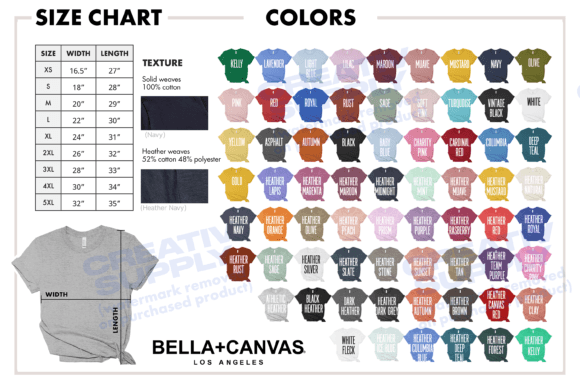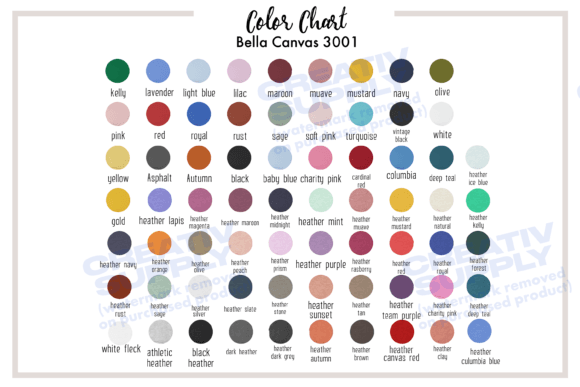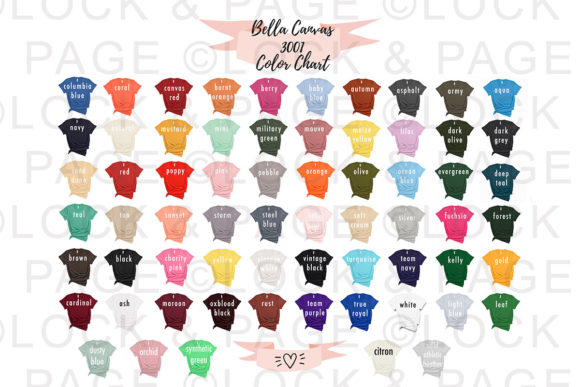
Bella Canvas 3001 Solids Color Chart: Your T-Shirt Design Blueprint
Unpacking the Essential Unisex Jersey Tee
When you're building a clothing brand or launching a new merch line, the foundation isn't just your graphic—it's the canvas you print on. The Bella Canvas 3001 is widely considered the industry standard for modern apparel blanks, and for good reason. It strikes that difficult balance between retail-ready quality and cost-effectiveness. However, choosing the right color for your design is where the strategy comes into play. The Bella Canvas 3001 Solids Color Chart isn't just a list of swatches; it is a roadmap for your visual branding.
Visually, the "3001" silhouette is defined by its retail fit. Unlike boxy, stiff work shirts, this tee features side seams that taper the body, creating a flattering shape for a wide demographic ranging from twenty to fifty years old. The fabric composition—typically a blend of airlume combed and ring-spun cotton—offers a smooth, tight-knit surface. This is critical for designers because it creates a superior print surface. Whether you are using direct-to-garment (DTG) printing or screen printing, the ink sits crisply on the fibers rather than soaking into a rough, textured weave.
The "Solids" aspect of the chart refers to the heather-free, consistent colorways available in the lineup. While heathered tees have their place in streetwear, solid colors provide a stable background that doesn't compete with intricate design assets. From the stark contrast of "Black" and "White" to the muted earth tones like "Forest" or the vibrant "Red," each shade in the Bella Canvas 3001 Solids Color Chart has been calibrated to align with current fashion trends while maintaining timeless appeal.
Strategic Applications for Designers and Brands
Understanding the utility of the Bella Canvas 3001 Solids Color Chart goes beyond picking a favorite color. It is about visual hierarchy and brand identity. For a startup founder or a small business owner, consistency is key. If you decide that "Heather Navy" is your primary brand color for apparel, you need to know exactly how that translates across different lighting conditions and print methods.
This chart is an indispensable design asset for several specific scenarios:
- Merchandising and E-commerce: If you are running a print-on-demand store, the Bella Canvas 3001 is likely the default option. Using a high-res JPEG mockup allows you to visualize how your typography or illustration interacts with the fabric color without ordering physical samples for every SKU.
- Corporate Uniforms: For businesses requiring staff uniforms, the solids offer a professional look. A deep "Burgundy" or "Dark Grey" provides a sophisticated backdrop for a logo design, ensuring the brand mark remains the focal point.
- Event Marketing: Planning a conference or a charity run? You need colors that pop in a crowd. Utilizing bright solids from the chart ensures visibility, while the soft fabric ensures attendees actually wear the shirt again, extending your marketing reach.
Furthermore, the chart helps in managing visual weight. A heavy, dark design might get lost on a "Black" tee if the ink isn't opaque enough, whereas it might look stunning on a "Sand" or "Natural" colored shirt. Conversely, a minimalist line-art design often looks best on darker solids where the negative space of the shirt color becomes part of the artwork itself.
Integrating the Chart into Your Workflow
For the creative professional, efficiency is currency. The prompt mentions a flat, high-res JPEG mockup, and this is where your workflow transforms. Instead of guessing, you can drag and drop your design onto the digital color swatches in Photoshop or Canva. This allows you to create a full lookbook in minutes. You can test how a script font interacts with the "Royal Blue" versus the "Kelly Green" instantly.
When evaluating project fit, consider the texture implied by the color. While the fabric is uniform, our eyes perceive color temperature differently. Warm tones like "Coral" or "Maroon" evoke energy and approachability, making them excellent for lifestyle brands or social media graphics. Cool tones like "Steel Blue" or "Teal" suggest reliability and calm, often used in tech or wellness branding.
Here is a practical tip for font pairing on these blanks: If you are using a heavy display font or a bold sans-serif, you have the luxury of using lighter fabric colors where the ink coverage is high. If you are working with a delicate serif font or a thin handwritten style, darker solids often provide better legibility by creating a stark contrast with the ink color (usually white or light grey).
Practical Considerations for Production
Before you finalize your selection from the Bella Canvas 3001 Solids Color Chart, always consider the printing method. DTG printers handle gradients and photographic details beautifully on the 3001’s tight knit. However, if you are screen printing, remember that the fabric color acts as your base layer. A "Yellow" tee requires different ink opacity settings than a "Navy" tee to ensure the design remains true to the artist's intent.
Ultimately, the Bella Canvas 3001 Solids Color Chart is more than a purchasing guide; it is a creative tool. It bridges the gap between digital design and physical product. By treating these color swatches as active design elements rather than passive backgrounds, you elevate your work from simple "merch" to considered, professional apparel. Whether you are a hobbyist making shirts for a family reunion or a publisher launching a premium line, mastering this chart is the first step toward a polished final product.